Cybersecurity threats are increasing at an unprecedented rate. As organizations continue adopting cloud platforms, remote work environments, SaaS applications, and digital transformation initiatives, securing user identities has become one of the most critical priorities for enterprise security teams.
Today, a compromised identity is often the starting point of a cyberattack. Unauthorized access can lead to data breaches, ransomware incidents, compliance violations, and financial losses.
This is why Identity and Access Management Software (IAM Software) has become an essential component of modern enterprise security strategies.
What Is Identity and Access Management Software?
Identity and Access Management (IAM) Software is a cybersecurity solution that controls user access to systems, applications, networks, and sensitive business data.
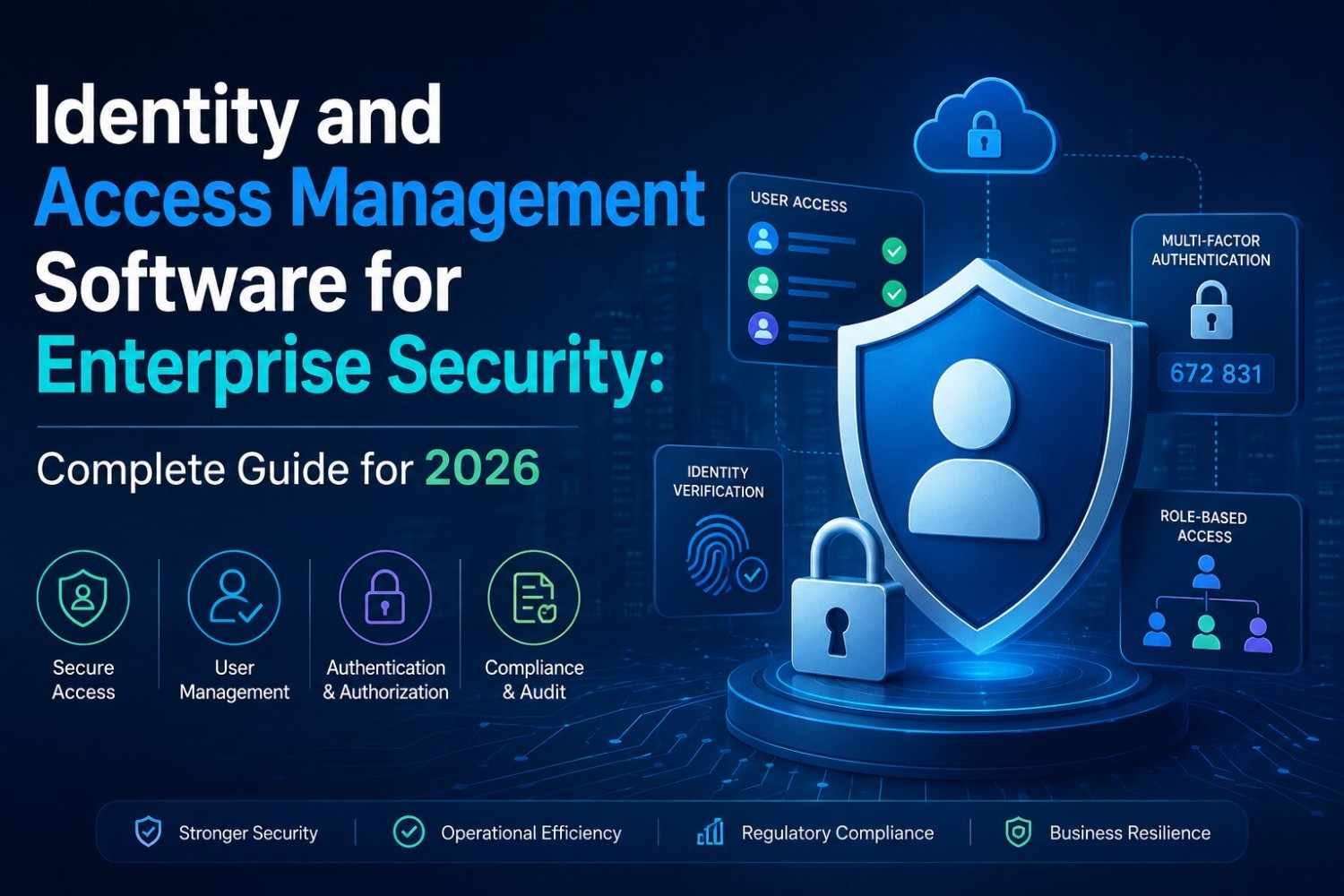
IAM platforms help organizations authenticate users, manage digital identities, enforce access policies, monitor login activity, protect sensitive information, reduce insider threats, and improve compliance. The primary goal is ensuring that the right individuals have access to the right resources at the right time.
Why Identity and Access Management Matters
Modern enterprises face challenges such as increasing cyberattacks, remote workforce expansion, cloud application growth, insider threats, regulatory compliance requirements, and third-party vendor access risks. Identity and Access Management Software helps mitigate these risks through centralized identity governance and access control.
Key Benefits of Identity and Access Management Software
1. Enhanced Enterprise Security
Helps prevent unauthorized access, reduce credential theft, monitor user activity, and detect suspicious behavior.
2. Stronger Access Control
Role-based access controls limit unnecessary permissions, reduce insider threats, improve accountability, and protect sensitive information.
3. Improved Regulatory Compliance
Supports compliance with GDPR, HIPAA, ISO 27001, SOC 2, PCI DSS, and other standards through audit trails and access logs.
4. Better User Experience
Features such as Single Sign-On (SSO), Multi-Factor Authentication (MFA), and Passwordless Authentication improve security while reducing login friction.
Core Features of IAM Software
Single Sign-On (SSO)
Allows users to authenticate once and gain access to multiple applications, improving productivity and reducing password fatigue.
Multi-Factor Authentication (MFA)
Provides an additional layer of security using passwords, mobile devices, biometrics, or security tokens.
Identity Governance and Administration (IGA)
Helps manage user identities, review access rights, monitor permissions, and automate user provisioning.
Privileged Access Management (PAM)
Secures administrative accounts and high-risk users through monitoring, session recording, and access controls.
Zero Trust Security and IAM
Zero Trust Security operates on the principle “Never Trust, Always Verify.” Identity and Access Management Software plays a central role in implementing Zero Trust by continuously validating users and devices before granting access.
AI and Machine Learning in IAM
AI-powered IAM Software can detect anomalous behavior, identify compromised accounts, monitor access patterns, and automate risk assessments.
How to Choose the Best IAM Software
Organizations should evaluate security features (MFA, SSO, PAM), cloud compatibility, integration capabilities, scalability, and AI-powered security before selecting a platform.
IAM Trends for 2026
- Passwordless Authentication
- AI-Driven Identity Security
- Zero Trust Adoption
- Cloud Identity Expansion
- Compliance Automation
Frequently Asked Questions
What is Identity and Access Management Software?
IAM Software helps organizations manage user identities, authenticate users, and control access to business systems and data.
Why is IAM important?
IAM improves cybersecurity, reduces risk, supports compliance, and protects sensitive information.
What is Zero Trust Security?
Zero Trust is a security framework that continuously verifies users and devices before granting access.
Conclusion
Identity and Access Management Software has become a cornerstone of modern enterprise cybersecurity strategies.
As organizations continue embracing cloud technologies, remote work, digital transformation, and Zero Trust Security, identity protection is more important than ever.
Modern IAM solutions combine identity governance, access control, privileged access management, AI-powered analytics, compliance automation, and cloud security into a unified platform.
For enterprises seeking stronger security, improved compliance, and reduced cyber risk in 2026, investing in Identity and Access Management Software is no longer optional—it is a business necessity.